Search Manic Mark's Blog

Friday, July 19, 2024

Sinner Or Saint - Joe Valino


Sinner Or Saint

Sinner Or Saint
Joe Valino
Arranged & Conducted by Joe Scussa
Debut Records D7505
1967

Joe Scussa - Piano
Dominic Mancini - Bass
Bobby Menaquale - Drums

From the back cover: Joe Valino is more than just a singer. Joe is a musicians singer – having been on the scene for several years - this is Joe's first opportunity to record an LP. The nite club circuit is and has ben Joe's life. Emotion is rare in music - this album is emotion. The choice of tunes was Joe's own. Beautiful tunes - by a beautiful person.

Woody Herman, Tony Bennett, Merv Griffin, Sarah Vaughn - all musical greats, love Joe - I personally rank Joe as a great singer and man. Joe is definitely on his way to make his place and leave his indelible mark in the music world. – Richie Kamuca formerly with Stan Kenton, Woody Herman and currently with Merv Griffin

I Have Dreamed
We've Got A World That Swings
A Quiet Thing
Love Life
Sinner Or Saint
Bluesette
Let's Face The Music And Dance
Remind Me
The Moment Of Truth
The More I See You
Stranger In Paradise
If I Love Again

The L.A. Connection Plays The Big Hits - Vol. 1


Dream

Knowning Me, Knowing You

Big Hits
The L. A. Connection Play The Big Hits - Vol. 1
Engineer: Tom Owen
Art Direction: David Lastaud
Springboard SPB-4075
1977

Gonna Fly Now
I'm Your Boogie Man
Dreams
Knowing Me, Knowing You
High School Dance
I'm In You
Southern Nights
Hotel California
When I Need You
Got To Give It Up

Monday, July 15, 2024

Bossa Nova - Lalo Schifrin


Menian Feia

Bossa Nova
New Brazilian Jazz
Lalo Schifrin and His Orchestra
Audio Fidelity AFLP 1981
1962

Lalo Schifrin - Piano
Leo Wright - Sax and Flute (Leo Wright appears through the courtesy of Atlantic Records)
Rudy Collins - Drums
Christopher White - Bass
Jose Paulo - Percussion
Jack Del Rio - Percussion

From the back cover: The term Bossa Nova first appeared in the Brazilian musical glossary in the last months of 1959 when a small group of amateur musician promoted a show in a little private club in Rio. Very little is known about that night's performers, but it is certain that many of them subsequently attained national fame. A few months later, in two very large out-door shows – one in the Amphitheater of the School of Architecture and the other in the Naval Academy – Bossa Nova was introduced to the general public. Thousands applauded the new sound in samba and Bossa Nova was promptly adopted by the younger generation of Brazilians as their own music.

These two Bossa Nova Festivals were promoted by a record that had just been issued. Chega de Saudade, recorded by the singer-guitarist-composer who was to be hailed later on, as expected, as the chief founder of Bossa Nova, Joao Gilberto. The record created quite a stir in Rio, especially because of one tune, "Desafinado," which was accused of being sung off-tune, as the Portuguese title indicated. The authors of Desafinado, Antonio Jobim and Milton Mendoca, were also to be among the fathers of Bossa Nova, along with Vinicius de Moraes, one of the best Brazilian poets of the century, and several other youngsters already marked for fame.

The two Festivals were largely attended by young Brazilians conscious of the conflict between their way of thinking and the spirit of old Brazil which in popular music outlasted the changes that took place in the country during the last ten  years or so. Strangely enough, while every aspect of Brazilian life and culture kept abreast of world changes – especially in architecture, poetry, theater, movies, industry, transportation – popular music clung to ideals and habits more akin to the present generation's grandfathers. In truth, it must be said that attempts had been made since, say, 1050 or 51, to modernize Brazilian music, mainly by giving old tunes a new arrangement, or by emphasizing new and better lyrics. (Perhaps the three most important renovators of Brazilian music prior to Bossa Nova were guitarist Luis Bona, lyricist Antonio Maria and composer Billy Blanco. Others contributed, especially singers Agostinho dos Santos and Elisette Cardoso, and composer Marino Pinto.) Musically, the attempted renovation of the early fifties was not radical enough. The tunes were too closely associated with night-club and cabaret themes and were in general very pessimistic and tragic. This was not in tune with the Brazilian outlook of life; hopeful, never despairing.

When Bossa Nova was introduced, the new generation of Brazilians recognized it as the music that ideally fitted their pattern of life; the music that best reflected their mood. And, it was essentially Brazilian; a reaction to foreign rhythms.

Apart from the lyrical qualities of the music, which set it apart from any other Brazilian musical experiment, the words of the Bossa Nova samba are an innovation in themselves. The fact that Vinicius de More as and Antonio Maris, both established names in Brazilian literature, have contributed to the new movement is proof that Bossa Nova is something that is being taken seriously; something of quality and endurance. The participation of Brazil's leading musicians and poets sets Bossa Nova apart from run-of-the-mill novelties and gimmicks.

There is a side aspect to Bossa Nova that must be stressed. The average Bossa Nova composer, lyricist or musician has a cultural background that is rarely encountered in other popular musical currents. Jobim, for instance, is an accomplished classical composer; Carlos Lyra, an excellent guitarist, teaches the instrument according to a new system that he devised. Most of them are university graduates.

Turning to the personnel of this recording, pianist-leader Schifrin, bassist Chris White, drummer Rudy Collins, and flutist-saxophonist Leo Wright, are all members of "Dizzy Gillespie's great jazz quartet which features the Bossa Nova. It should be pointed out that these four men have more experience in the playing of authentic Bossa Nova than any jazz men in America with the exception of Gillespie himself.

The quartet has been rewardingly augmented by the addition of two great Latin percussionists, Jose Paulo of Brazil and Jack Del Rio of Argentina. Paulo performs on the pandeiro, a Brazilian tambourine. In his hands, this ostensibly simple instrument becomes a fountain of varied sound, ranging from the buoyant boom of the conga drum to the flashing fire of Turkish finger-cymbals. Del Rio, a member of Xavier Cugat's big orchestra adds dynamic whispers of rhythm with the cabaca, a gourd instrument covered with a loose network of beads.

All selections in this album were orchestrated by the great Argentinian pianist, Boris (Lalo) Shifrin, who also conducted from the piano bench. Lalo was born in Buenos Aries in 1932. His father was a violinist with the city's Teatro Colon. Lalo has studied harmony and theory with Juan-Carlos Paz, as well as sociology and law at the University of Buenos Aries. He represented Argentina at the 1954 International Festival of Jazz in Paris. And, in 1958, he won the academy award of Argentina for film music for his "El Jefe" score.

In a typically incisive article (Downbeat, April 12, 1962), Gene Lees sums up the dynamic young exponent of Bossa Nova: "He applies Latin American methods of jazz, in a highly  personal way. Sometimes he can be heard repeating a left-handed chord in rhythmic unity with the running Latin chords (octaves with fifths, or sometimes fifths with sixths in between) while he is playing at surprising speed with his right. But the ideas are jazz ideas. As often as not, a solo will start with a single line and gradually develop into a powerful and exciting excursion into the Latin toward the end.

"All this music comes from a somewhat unkempt, rather serious, and usually confused-looking young man who somehow reminds one of Bill Dana's television character, Jose Jiminez. Unsmiling when you meet him, Schifrin looks as if he'll never in a million years, know what's happening.

"The slightly discombooberated air is probably related to the fact that English is not his native language and he has to listen carefully to ti. The subtlety of a joke will pass by when he has first met a person. Later, as his ears become attuned to the acquaintance's speech, his big, easy sense of humor manifests itself. He is a thoroughly cultivated young man of polished tastes, who may be found in intense conversation about Goethe or quoting the poetry of Paul Valery in French." – Joao Tabajara

Boato
Chora Tua Tristeza
Poema Do Adeus
Apito No Samb
Chega De Saudade
Bossa Em Nova York
O Amor E A Rosa
O Menino Desce O Morro
Menina Feia
Ouca
Samba De Uma Nota So
Patinho Feio

Sunday, July 14, 2024

George Wein's Newport All-Stars


Topsy

George Wein's Newport All-Stars
Produced by Nesuhni Ertegun & Joel Dorn
Recorded at Atlantic Recording Studios, New York
Recording Engineers: William Arlt & Adrian Barber
Cover Illustration & Design: Stanislaw Zagorski
Atlantic SD 1533
1969

George Wein - Piano, Electric Piano & Vocal on Nobody Knows You When You Are Down And Out
Ruby Braff - Cornet
Red Norvo - Vibraphone 
Tal Farrow - Guitar & Guitar Bass
Barney Kessel - Guitar
Larry Ridley - Bass
Dom Lamond - Drums

Blue Boy
These Foolish Things
In A Little Spanish Town
Am I Blue
Ja-Da
Topsy
My Melancholy Baby
Sunny
Nobody Knows You When You Are Down And Out
Exactly Like You

Stan Getz Blue


Big Red's Boogie Woogie

Stan Getz Blues
Originally recorded under the supervision of Norman Granz
A&R Coordinator & Research: Jack Maher
Cover Art: Jon Henry
Cover Design: Acy R. Lehman
Mono Remastering Engineer: William Amatruto
Stereo Remastering Engineer: Don Young
Director of Engineering: Val Valentin
VSP Verve VSP-31

Chocolate Sundae
Recorded in New York City, August 1, 1957
Originally released on Verve V-8248, Jazz Giants '58
Stan Getz - Tenor Sax
Gerry Mulligan - Bariton Sax
Harry Edison - Trumpet
Louis Bellson - Drums
Oscar Peterson - Piano
Herb Ellis - Guitar
Ray Brown - Bass

Big Red's Boogie Woogie
Recorded in New York City, October 11, 1957
Originally released on Verve V-8252, Nothing But The Blues
Herb Ellis - Guitar and Leader
Stan Getz - Tenor Sax
Roy Eldrigde - Trumpet
Ray Brown - Bass
Stan Levy - Drums

Tin Roof Blues
Personnel and recording information same as Big Red's Boogie Woogie

Pap's Blues
Personnel and recording information same as Big Red's Boogie Woo

Apple Jam
Recored in Los Angeles, September, 1953
Originally released on Verve V-8051, Norman Granz Jam Session #3

The Latin Soul Of Xavier Cugat


Jungle Drums

The Latin Soul Of Xavier Cugat
Previously released on Mercury Records
Pickwick/33 SPC 3095 STEREO

The Breeze And I
Siboney
Malagueña
Always In My Heart
Say Si Is
Two Hearts That Pass In The Night
La Comparsa
Maria, My Own
Jungle Drums
Dust On The Moon

Hold On I'm Comin' - Herbie Mann


Memphis Underground

Hold On I'm Comin'
Herbie Mann & The Family Of Mann
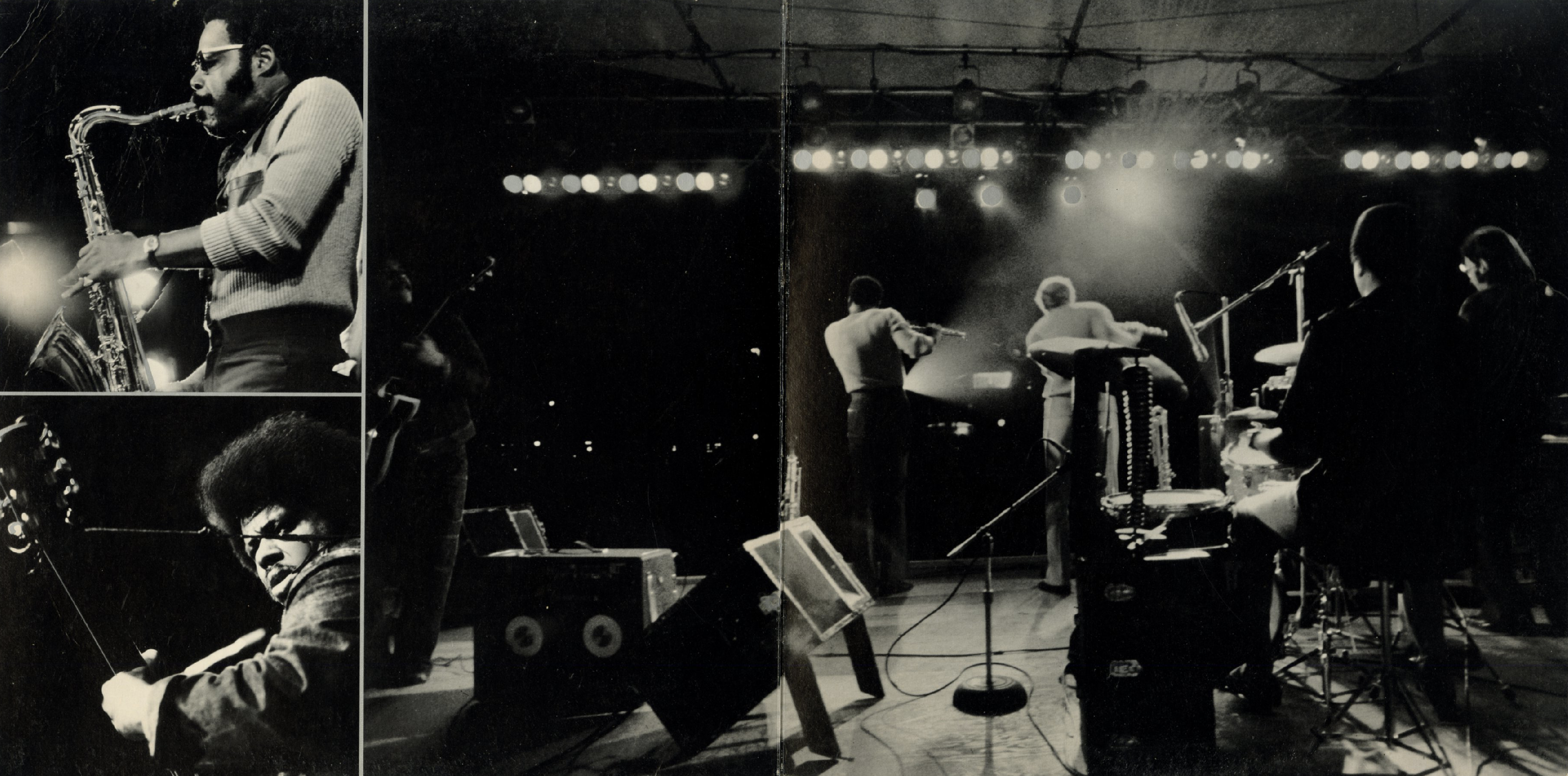
Recorded Live At The 1972 New York & Montreux Jazz Festivals (with the exception of Respect Yourself)
Produced by Herbie Mann, David Newman, Sonny Sharrock, Pat Rebillot, Andy Mason & Reggie Ferguson
Recording Engineer: Stephen Sulke
Re-mixed at Atlantic Recording Studios, New York, N.Y.
Re-mix Engineer: Gene Paul
Photography: Katsuji Abe
Design: Paula Bisacca
Atlantic STEREO SD 1632
1973

Herbie Mann - Flute
David Newman - Tenor Sax & Flute
Sonny Sharrock - Guitar
Pat Rebillot - Electric Piano
Andy Muson - Bass
Reggie Ferguson - Drums

(Gimme Some Of That Good Old) Soul Beat Momma
Never Can Say Goodbye
Respect Yourself
Memphis Underground
Hold On, I'm Comin'

Wednesday, July 10, 2024

Sealed With A Kiss - Brian Hyland


Walk A Lonely Mile

Sealed With A Kiss
Brian Hyland
Arranged and Conducted by Stan Applebaum
Recording Supervison: Gary Geld, Peter Udell
Recording Engineer: William Stoddard
Cover Design: Are Productions
Liner Design: Joe Lebow
Cover Photo: Maurice Seymour
Portions of this album were previously included in ABC-400
ABC-Paramount ABC-431
1962

From the back cover: This album is a musical portrait of a young man who has grown up in the nation's phonographs. His name is Brian Hyland. Like many other young singers, Brian first rode to fame on the popularity crest of novelty songs – but unlike others, he has outgrown novelty tunes and has become a versatile entertainer, performing material which is both lyrically and musically mature.

Brian is not only a favorite in the United States. His international popularity has carried him on tours of Japan and Puerto Rico; plans are being completed for a tour of England and Germany. His records have become top hits in many other countries including Ireland, Israel, Norway, Sweden, Canada and South America.

Each new Hyland record piles up greater success for Brian, beginning with his first single for ABC-Paramount, Let Me Belong To You. Each succeeding record climbs higher on the popularity charts – Ginny Come Lately – and, at the top of the list, Sealed With A Kiss, which prompted this album. These three Hyland hits are included here.

This package presents Brian singing two types of material – a collection of top hits which will no doubt become tomorrow's standards – and songs which have been associated with Brian.

Still living with his family, Brian plans a college education for himself and schooling for his sister and three younger brothers. He's a sports fan and participates in baseball, football, swimming, fishing and bowling. He's a great fan of country music and likes to accompany himself on the guitar. His second most-prized honor (the first is his gold record for Itsy Bitsy Teeny Weeny Yellow Polka-Dot Bikini) is the award of Most Popular Boy at his local YMCA.

Some Hyland highlights are: 5'91/2"; 145 lbs.; blond hair; blue eyes; born November 12; likes traveling, sweaters and shirts; and most of all, singing and performing.

Brian is the stuff stars are made of – and he is exactly that! He has bypassed the pitfall of obscurity into which many novelty singers have fallen, and he has stepped on the escalator of full-fledged stardom – headed straight up!

Listen now to twelve songs by Brian Hyland wrapped up in talent, and Sealed With A Kiss. – Rick Ward

From Billboard - April 25, 1962: Brian Hyland is about as hot as an artist can be right now, with the single "Sealed With A Kiss" riding the top of the charts. Here's the same single, along with the flip of that disk "Summer Job," another recent entry. "Ginnie Come Lately," and a flock of others, all showcasing the singer in admirable style. To add to the teen appeal of the set, there's a handsome color shot of Hyland on the cover.

Bye Bye Love
Let Me Belong To You
The Night  I Cried
Are You Lonesome Tonight
I Should Be Gettin' Better
Ginny Come Lately
Love Me Tender
Sealed With A Kiss
It Ain't That Way At All
Summer Job
I'll Never Stop Wanting You
Walk A Lonely Mile

Monday, July 8, 2024

The Roar Of The Red Lion - Mainstream - Various


Venus

Born To Be Wild

Lady Madonna

Everyday People

Mainstream Records Presents
The Roar Of The Red Lion
A New Concept Of Today's Music, Sounds And Recording Techniques
Featuring The Young Lions - Dean Christopher, Ron Frangipane, Joe Scott, The Phoenix Authority
Mainstream/A Red Lion Productions
Mainstream SRL-1 STEREO

Rated X For Excitement 
Ron Frangipane & His Orchestra
MRL-300

Wedding Bell Blues
Holly Holy
Venus

Motion Picture 
The Now Generation
Joe Scott & His Orchestra
MRL-301

Born To Be Wild
Raindrops Keep Fallin' On My Head
Suicide Is Painless

Images
Dean Christopher & His Orchestra
MRL-302

Eli's Coming
Alice's Restaurant
Lady Modonna

Blood, Sweat & Brass
The Phoenix Authority
MRL-303

Spinning Wheel
Honky Tonk Women
Everyday People

Saturday, July 6, 2024

Kenton At The Las Vegas Tropicana - Stan Kenton


Random Riff & Closing Theme

Kenton Live From The Las Vegas Tropicana
Produced by Lee Gillette and Kent Larsen
Capitol Records T1460
1961

Leader & Piano - Stan Kenton
Saxophones - Richie Kantuka, Lennie Niehaus, Billy Root, Sturi Swenson, Bill Trujillo
Trumpets - Bud Brisbois, Joe Burnett, Frank Huggins, Roger Middleton, Jack Sheldon
Trombones - Jim Amolotte, Kent Larsen, Archie LeCoque, Bob Olson, Bill Smiley
Bass - Red Kelly
Drums - Jerry McKenzie

Artistry In Rhythm
Bernie's Tune
Tuxedo Junction
Street Scene
Puck's Blues
I Concentrate On You
The End Of A Love Affair
You And I And George
Sentimental Riff
Random Riff
Closing Theme